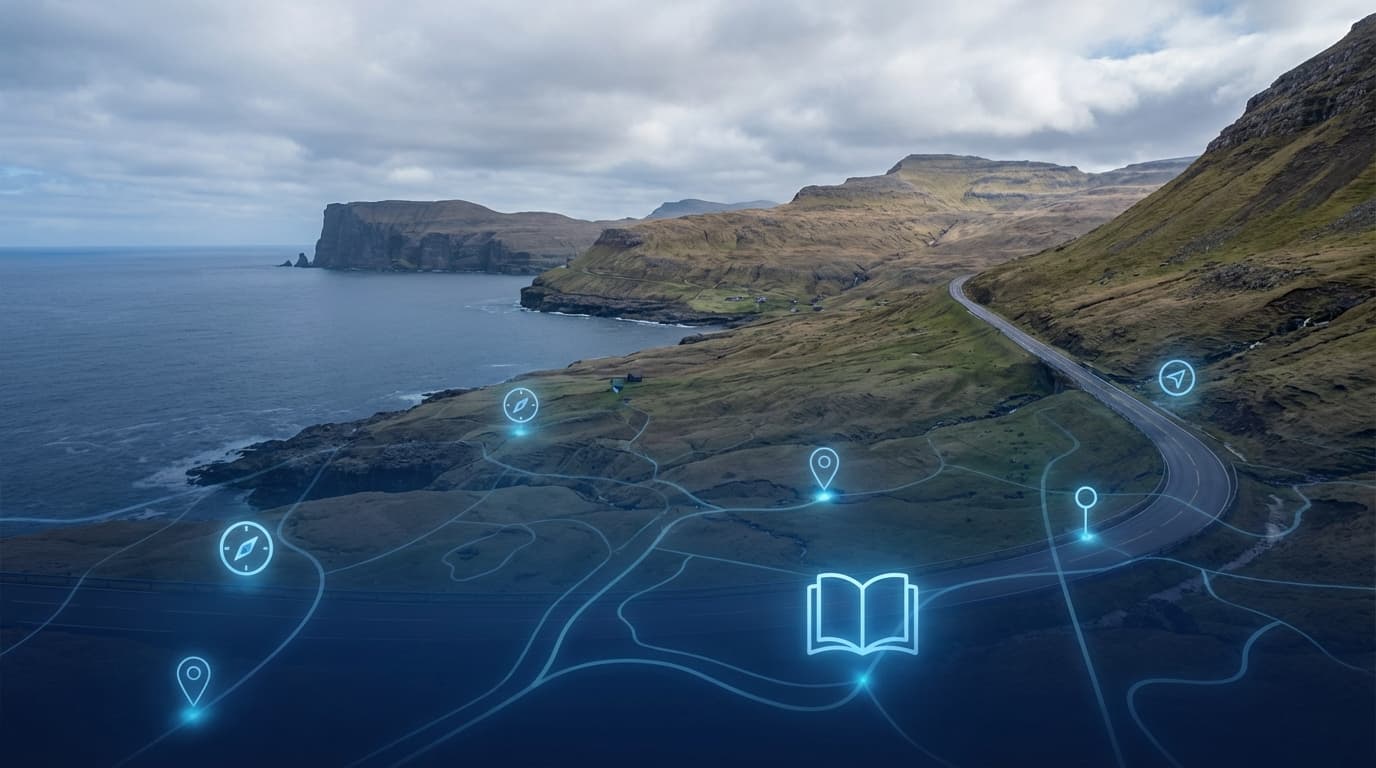
Tired of the crowds? Discover Europe's hidden treasures
Dreaming of Europe, but the thought of elbowing your way through crowds at the Eiffel Tower or queuing for hours at the Colosseum already wears you out? You're not alone. Overtourism is a reality, but the Old Continent is full of little-known gems, places where authenticity isn't a marketing buzzword, but a way of life. Forget the packed capitals and overcrowded beaches. This guide is an invitation to an authentic journey, an exploration of destinations that, for now, remain under the radar of the masses.
We've selected 10 underrated European destinations for you, places that offer breathtaking landscapes, a rich history, and a vibrant culture, without the stress and exorbitant prices of major tourist hotspots. Get ready to rediscover Europe—the one that whispers its secrets to those who know how to listen.
1. The Azores, Portugal: The Hawaii of the Atlantic
In the middle of the Atlantic lies an archipelago of raw volcanic beauty, often overshadowed by the popularity of Lisbon and the Algarve. The Azores are a paradise for nature and adventure lovers.
Why is it underrated?
The geographical isolation of the Azores has helped preserve their unique character. Far from the typical tourist trails, this archipelago offers an immersive experience where nature reigns supreme.
What to do and see?
- Hiking on São Miguel Island: Explore the crater lakes of Sete Cidades, one blue and the other green, and bathe in the natural hot springs of Furnas.
- Whale and dolphin watching: The Azores are one of the world's best sanctuaries for whales and dolphins. Embark on an unforgettable excursion.
- Climbing Mount Pico: Climb Portugal's highest peak on the island of Pico for a panoramic view of the archipelago.
- Discovering the waterfalls of Flores Island: A lush island, designated a UNESCO Biosphere Reserve, where waterfalls plunge directly into the ocean.
Practical tip
Rent a car. It's the best way to explore the islands at your own pace and discover secret viewpoints not accessible by public transport.
2. Albania: The Unexplored Balkan Riviera
Tucked between Greece and Montenegro, Albania has long been a mystery to travelers. Today, it unveils idyllic beaches, UNESCO-listed archaeological sites, and legendary hospitality, all for a fraction of the price of its neighbors.
Why is it underrated?
Its communist past and prolonged isolation delayed its tourism development. Today, that is its greatest asset: a magnificent coast still preserved from massive concrete development.
What to do and see?
- The Albanian Riviera: Relax on the beaches of Ksamil, Dhërmi, or Himara, with turquoise waters worthy of the Caribbean.
- The site of Butrint: Travel back in time by exploring this ancient city, a testament to 2,500 years of Greek, Roman, Byzantine, and Venetian history.
- Gjirokastër and Berat: Visit these two UNESCO-listed museum-cities, with their imposing fortresses and unique Ottoman houses.
- The Albanian Alps: Hike in the Theth or Valbona region for spectacular and untouched alpine landscapes.
Practical tip
Don't hesitate to go off the beaten path. Albania's true charm lies in its small villages and the warm welcome of its people. It's a perfect destination for a budget trip rich in discoveries.
3. Slovenia: The green heart of Europe
Everyone knows Lake Bled, but Slovenia is much more than that picture-postcard image. It's a pocket-sized country that packs an incredible diversity of landscapes, from Alpine peaks to sunny vineyards and spectacular caves.
Why is it underrated?
Often seen as a mere stopover between Italy and Croatia, Slovenia is a destination in its own right that deserves to be explored for its omnipresent nature and its commitment to sustainable tourism.
What to do and see?
- The Soča Valley: Follow the course of this emerald-colored river, a paradise for kayaking, rafting, and hiking.
- Ljubljana: Stroll through the pedestrian-friendly capital, voted European Green Capital, with its charming bridges and relaxed atmosphere.
- Postojna and Škocjan Caves: Explore the karstic underworld. The Škocjan Caves, a UNESCO site, are home to one of the largest underground canyons in the world.
- The Goriška Brda wine region: Nicknamed the "Slovenian Tuscany," taste exceptional local wines amidst a backdrop of green hills and medieval villages.
Practical tip
Slovenia is a very safe country, but as with anywhere, it's good to know some basic travel safety tips, especially if you go hiking in the mountains. Always inform someone of your itinerary.
4. Georgia: At the crossroads of Europe and Asia
With its unique culture, distinct alphabet, delicious cuisine, and landscapes ranging from the snow-capped peaks of the Caucasus to the beaches of the Black Sea, Georgia is a fascinating and exotic destination.
Why is it underrated?
Its geographical location and post-Soviet history make it a less obvious choice for Western European travelers. Yet, it is one of the most welcoming and surprising countries on the continent.
What to do and see?
- Tbilisi: Get lost in the alleys of the old town, with its colorful wooden balconies, ancient churches, and sulfur baths.
- Svaneti: Go trekking in this remote mountainous region, famous for its fortified villages and medieval defense towers.
- Kakheti: Explore the country's main wine region, the cradle of viticulture 8,000 years ago, and discover the traditional winemaking method in qvevri.
- David Gareja Monastery: Admire this cave monastery complex carved into the side of a mountain, in a semi-desert landscape on the border with Azerbaijan.
Practical tip
Cuisine is an essential part of Georgian culture. Don't leave without trying khachapuri (cheese-filled bread) and khinkali (large dumplings).
5. North Macedonia: Historical jewel of the Balkans
This small, landlocked country is a treasure trove of history, nature, and spirituality. Less known than its neighbors, North Macedonia offers an intense and incredibly affordable travel experience.
Why is it underrated?
Its recent name and low media coverage mean it is often left off Balkan itineraries. This is a mistake, as the country possesses sites of major beauty and historical importance.
What to do and see?
- Lake Ohrid: Nicknamed the "Pearl of the Balkans," this lake, among the oldest and deepest in Europe, is a UNESCO World Heritage site. Visit the town of Ohrid, its 365 churches, and the iconic Monastery of Saint John at Kaneo.
- Skopje: Discover a capital in the midst of transformation, where remnants of the Ottoman bazaar stand alongside immense statues and grandiose neoclassical buildings.
- Matka Canyon: A few kilometers from Skopje, escape to this spectacular canyon for a boat trip, kayaking, or a visit to hidden caves.
- Mavrovo National Park: Explore the country's largest national park, with its mountainous landscapes, lakes, and its semi-submerged church.
Practical tip
Take advantage of the extremely low prices to travel like a local. Eat in the kafanas (traditional taverns) and use local buses to travel between cities.
6. Romania (Transylvania): Beyond the Dracula myth
Transylvania evokes images of gothic castles and vampires. While Bran Castle is a must-see, the region is above all a conservatory of European rural life, with fortified Saxon villages and bucolic landscapes.
Why is it underrated?
The image associated with Dracula, though popular, overshadows Romania's cultural and natural wealth. Many travelers stop in Bucharest without exploring the treasures of Transylvania.
What to do and see?
- Medieval towns: Stroll through the colorful streets of Sighișoara (birthplace of Vlad the Impaler), Brașov with its huge central square, and Sibiu, a former European Capital of Culture.
- Saxon fortified churches: Discover villages like Biertan or Viscri (protected by Prince Charles), where time seems to have stood still.
- The Transfăgărășan Highway: Drive on one of the most spectacular roads in the world, which winds through the Carpathian Mountains.
- Hiking in the Carpathians: Explore the Retezat or Piatra Craiului national parks, home to rich wildlife, including brown bears and wolves.
Practical tip
Opt for accommodation in a pensiune (guesthouse) in the villages for a more authentic experience and to taste hearty, home-cooked food.
7. The Faroe Islands, Denmark: Dramatic beauty and solitude
An autonomous archipelago attached to Denmark, the Faroe Islands are a world apart. With more sheep than people, these 18 volcanic islands offer landscapes of a rare intensity: sheer cliffs, waterfalls plunging into the ocean, and villages with grass roofs.
Why is it underrated?
Their unpredictable climate and more complex access than neighboring Iceland protect them from mass tourism. It is a destination for travelers in search of raw nature and tranquility.
What to do and see?
- Múlafossur Waterfall: Admire this iconic waterfall that tumbles directly into the ocean from a cliff, near the village of Gásadalur.
- Hike to Lake Sørvágsvatn: Discover this lake that appears to float above the ocean, a spectacular optical illusion.
- Puffin watching on Mykines Island: From May to August, thousands of these adorable birds nest on the island's cliffs.
- The village of Gjógv: Walk through this picturesque village known for its natural harbor nestled at the end of a gorge.
Practical tip
The weather changes very quickly. Be prepared with waterproof clothing and several layers, even in summer. Renting a car is essential to explore the archipelago, which is connected by undersea tunnels and bridges.
8. Montenegro: The wild pearl of the Adriatic
Often in the shadow of its neighbor Croatia, Montenegro offers a concentration of wonders in a tiny territory. From the Bay of Kotor, Europe's southernmost fjord, to the rugged mountains of Durmitor National Park, the country surprises with its diversity.
Why is it underrated?
Despite its growing popularity, Montenegro remains less crowded than Croatia, especially its mountainous interior, which is a real playground for adventurers.
What to do and see?
- The Bay of Kotor: Sail on this spectacular bay, visit the fortified city of Kotor and the baroque village of Perast.
- Durmitor National Park: Hike around the Black Lake (Crno Jezero), go rafting in the Tara River Canyon (the deepest in Europe), and enjoy the alpine scenery.
- Sveti Stefan: Admire this former fishing village turned into a luxury hotel-island, one of the country's most famous images.
- Lake Skadar: Explore the largest lake in the Balkans, a paradise for birdwatching, by kayak or on a boat trip.
Practical tip
For a breathtaking view of the Bay of Kotor, take the serpentine road that climbs from Kotor towards Lovćen National Park. The 25 hairpin turns offer stunning panoramas.
9. Estonia: Between medieval and digital
Estonia is a country of contrasts. Its capital, Tallinn, has one of the best-preserved medieval old towns in Europe, while the rest of the country is at the forefront of technology and innovation. But beyond this duality, Estonia is a land of immense forests, mysterious bogs, and over 2,000 islands.
Why is it underrated?
Along with Latvia and Lithuania, it is often lumped under the term "Baltic States," without recognition of its unique specificities (Finno-Ugric language, strong Nordic influence). Away from Tallinn, the country is largely unexplored.
What to do and see?
- Tallinn's Old Town: Go back in time by wandering the cobbled streets of this UNESCO-listed Hanseatic city.
- Lahemaa National Park: Discover Estonian nature in its purest form, with its forests, bogs, and historic manors along the coast.
- The islands of Saaremaa and Muhu: Take the ferry to these peaceful islands, known for their windmills, fishing villages, and the Kaali meteorite crater.
- Tartu: Visit the country's intellectual and cultural capital, a young and dynamic university city.
Practical tip
Try a traditional Estonian smoke sauna (the suitsusaun), an immersive cultural experience inscribed on UNESCO's Intangible Cultural Heritage list.
10. The Moravia region, Czech Republic: The country's other face
When you think of the Czech Republic, Prague immediately comes to mind. Yet, the eastern region of Moravia is a hidden treasure of vineyards, fairytale castles, and charming historic towns, without the capital's crowds.
Why is it underrated?
Almost all tourist attention is focused on Prague. Moravia remains an authentic region where you can discover Czech culture in a more intimate and relaxed way.
What to do and see?
- Brno: Explore the country's second-largest city, a vibrant cultural and gastronomic hub with surprising modernist architecture.
- South Moravia: Follow the wine route, cycle through the rolling hills that earn it the nickname "Moravian Tuscany," and visit wine towns like Mikulov and Znojmo.
- The Lednice-Valtice Cultural Landscape: Discover this UNESCO-listed cultural landscape, a huge park dotted with two magnificent castles and numerous romantic follies.
- Olomouc: Visit this former capital of Moravia, which has a magnificent main square with a UNESCO-listed Holy Trinity Column and a unique astronomical clock.
Practical tip
Visit the traditional wine cellars (sklípek) of South Moravia. Local winemakers will welcome you for a friendly tasting of their wines, often accompanied by local specialties.