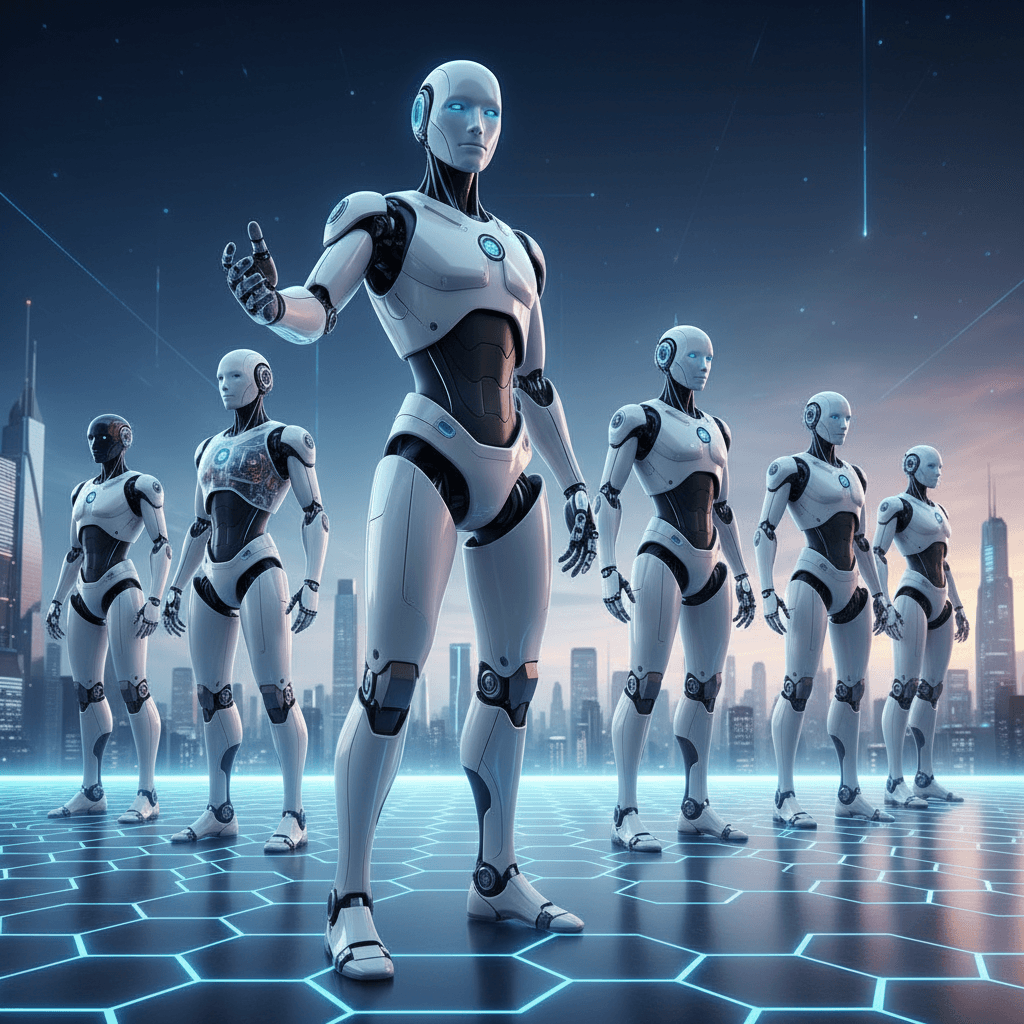
Top 5 Humanoid Robots in 2026
The robotics landscape has transformed dramatically, with humanoid robots transitioning from science fiction concepts to commercially available companions, workers, and assistants. As we navigate through 2026, several groundbreaking humanoid robots have entered the consumer and enterprise markets, offering unprecedented capabilities in artificial intelligence, mobility, and human interaction.
These sophisticated machines represent years of advancement in robotics engineering, combining cutting-edge AI processing, advanced motor systems, and intuitive communication interfaces. From household assistance to professional applications, today's humanoid robots are reshaping how we live and work.
Tesla Optimus Gen 3: The Workforce Revolution
Tesla's third-generation Optimus has emerged as the most commercially successful humanoid robot of 2026, with over 50,000 units sold globally. Standing 5'8" tall and weighing 125 pounds, this bipedal marvel incorporates Tesla's Full Self-Driving neural networks adapted for humanoid navigation and task execution.
Key Specifications and Capabilities
The Optimus Gen 3 features 40 electromechanical actuators providing human-level dexterity across its joints. Its advanced vision system processes visual information at 120 frames per second through eight cameras, enabling precise object recognition and spatial awareness. The robot's integrated AI transcription tools allow it to understand and respond to complex verbal instructions in over 30 languages.
Battery life extends up to 8 hours of continuous operation, with the ability to autonomously return to its charging station when power runs low. The robot's hands feature 12 degrees of freedom each, capable of manipulating objects weighing up to 45 pounds with remarkable precision.
Real-World Applications
Manufacturing facilities have deployed Optimus Gen 3 units for assembly line work, quality control inspections, and inventory management. In domestic settings, early adopters report successful implementation for household chores including laundry folding, kitchen assistance, and basic maintenance tasks.
Retail price starts at $35,000 for the base model, with enterprise versions featuring enhanced durability and specialized tooling available for $55,000.
Honda ASIMO Evolution: The Communication Specialist
Honda's latest ASIMO Evolution represents two decades of refinement in humanoid robotics, focusing primarily on human-robot interaction and communication assistance. This 4'3" robot weighs just 85 pounds while delivering exceptional mobility and social intelligence capabilities.
Advanced Communication Features
ASIMO Evolution's standout feature lies in its sophisticated language processing system. The robot can simultaneously interpret spoken conversations, generate multilingual subtitles in real-time, and provide AI subtitle generation for meetings and presentations. This makes it invaluable for international business environments and accessibility applications.
The robot's facial recognition system can identify and remember up to 10,000 individual faces, personalizing interactions based on previous encounters and learned preferences. Its emotion recognition algorithms analyze facial expressions, voice tonality, and body language to respond appropriately to human emotional states.
Educational and Healthcare Integration
Schools and universities have embraced ASIMO Evolution as a teaching assistant, capable of delivering lessons in multiple languages while providing real-time speech to text AI conversion for hearing-impaired students. Healthcare facilities utilize the robot for patient companionship, medication reminders, and basic vital sign monitoring.
Pricing begins at $42,000 for educational institutions, with healthcare-certified models available for $58,000.
Boston Dynamics Atlas Commercial: The Athletic Powerhouse
Transitioning from research prototype to commercial product, Boston Dynamics' Atlas Commercial brings unprecedented athleticism and agility to the humanoid robot market. Standing 6 feet tall and weighing 180 pounds, Atlas Commercial can navigate complex terrains, climb stairs, and perform acrobatic movements that surpass human capabilities.
Unmatched Physical Capabilities
Atlas Commercial's hydraulic actuation system generates enough power to lift objects weighing up to 100 pounds while maintaining perfect balance. The robot can run at speeds up to 8 mph, jump over obstacles 3 feet high, and recover from falls with remarkable grace. Its advanced gyroscopic sensors and real-time balance algorithms enable operation on uneven surfaces, stairs, and narrow walkways.
The robot's hands feature adaptive gripping technology that automatically adjusts pressure based on object fragility and weight distribution. This prevents damage to delicate items while maintaining secure holds on heavy objects.
Industrial and Emergency Applications
Construction companies have deployed Atlas Commercial units for dangerous tasks including high-altitude work, hazardous material handling, and structural inspections. Emergency response teams utilize the robot's climbing abilities for search and rescue operations in collapsed buildings and difficult terrain.
The robot's integrated video accessibility tools enable remote operation while providing real-time visual feedback to human operators. This capability proves essential for dangerous environments where human presence poses significant risks.
Commercial pricing starts at $75,000, with specialized emergency response configurations available for $95,000.
SoftBank Pepper Pro Max: The Social Intelligence Leader
SoftBank's Pepper Pro Max represents the evolution of social robotics, designed specifically for customer service, entertainment, and therapeutic applications. This 4-foot-tall humanoid features an expressive tablet display for a chest and highly articulated arms capable of natural gesturing.
Emotional Intelligence and Social Interaction
Pepper Pro Max's emotional intelligence system analyzes over 200 social cues to determine appropriate responses and behaviors. The robot can detect stress levels through voice analysis, adjust its communication style based on cultural contexts, and maintain engaging conversations for extended periods.
Its integrated AI captioning software provides real-time text display of conversations, making interactions accessible to deaf and hard-of-hearing individuals. The robot's automatic subtitle generation capabilities extend to video content, creating inclusive experiences in retail and entertainment environments.
Commercial Success Stories
Retail chains report 30% increases in customer engagement when Pepper Pro Max units serve as greeters and product information assistants. Hotels have integrated the robots for concierge services, language translation, and entertainment programming for guests.
Therapeutic applications show promising results, with elderly care facilities using Pepper Pro Max for cognitive stimulation activities, medication reminders, and social companionship. The robot's ability to play games, tell stories, and engage in meaningful conversations helps combat isolation among elderly residents.
Base retail price is $28,000, with therapeutic care versions featuring specialized software and safety certifications available for $38,000.
Xiaomi CyberOne Enterprise: The Versatile Assistant
Xiaomi's CyberOne Enterprise brings humanoid robotics to small businesses and tech-savvy consumers with an impressive feature set at a competitive price point. Standing 5'9" tall with a sleek, modern design, this robot focuses on practical applications and seamless smart home integration.
Smart Home Integration and AI Features
CyberOne Enterprise connects with over 5,000 smart home devices, serving as a central control hub for lighting, security, entertainment, and environmental systems. The robot's AI processing capabilities handle complex automation routines while learning user preferences over time.
Its built-in subtitle creation platform enables content creators to generate professional subtitles for videos, while the automated transcription feature converts meetings and lectures into searchable text documents.
Business and Creative Applications
Small businesses utilize CyberOne Enterprise for reception duties, inventory tracking, and customer service support. Creative professionals appreciate the robot's ability to assist with content creation, including AI subtitle maker functions that streamline video production workflows.
The robot's 6-hour battery life and wireless charging capability enable continuous operation throughout standard business hours. Its modular design allows for hardware upgrades and customization based on specific use cases.
Market Performance and Accessibility
With over 25,000 units sold in its first six months, CyberOne Enterprise has captured significant market share in the small business and prosumer segments. Its competitive pricing at $19,999 makes humanoid robotics accessible to a broader audience while maintaining professional-grade capabilities.
Market Trends and Consumer Adoption
The humanoid robot market has experienced explosive growth in 2026, with total sales exceeding 200,000 units globally. This represents a 400% increase from 2024 figures, driven by improved AI capabilities, reduced manufacturing costs, and expanding practical applications.
Industry Adoption Patterns
Manufacturing leads adoption with 35% of sales, followed by healthcare at 22%, retail at 18%, education at 15%, and residential use at 10%. Enterprise customers typically invest in multiple units, with average orders ranging from 3-10 robots depending on facility size and application requirements.
The integration of advanced video subtitle software capabilities has opened new markets in media production, education, and accessibility services. Many organizations view humanoid robots as essential tools for creating inclusive environments and improving communication across language barriers.
Technical Advancement Drivers
Improved battery technology has extended operational times while reducing charging periods. Advanced materials science has created lighter, stronger components that enhance durability while reducing manufacturing costs. AI processing improvements enable real-time decision-making and natural language interactions that feel genuinely conversational.
Safety certifications and regulatory approvals have streamlined deployment processes, making it easier for organizations to integrate humanoid robots into existing workflows. Insurance coverage for robotic workers has become standard, reducing financial risks for early adopters.