Is Introducing a Universal Dividend Feasible?
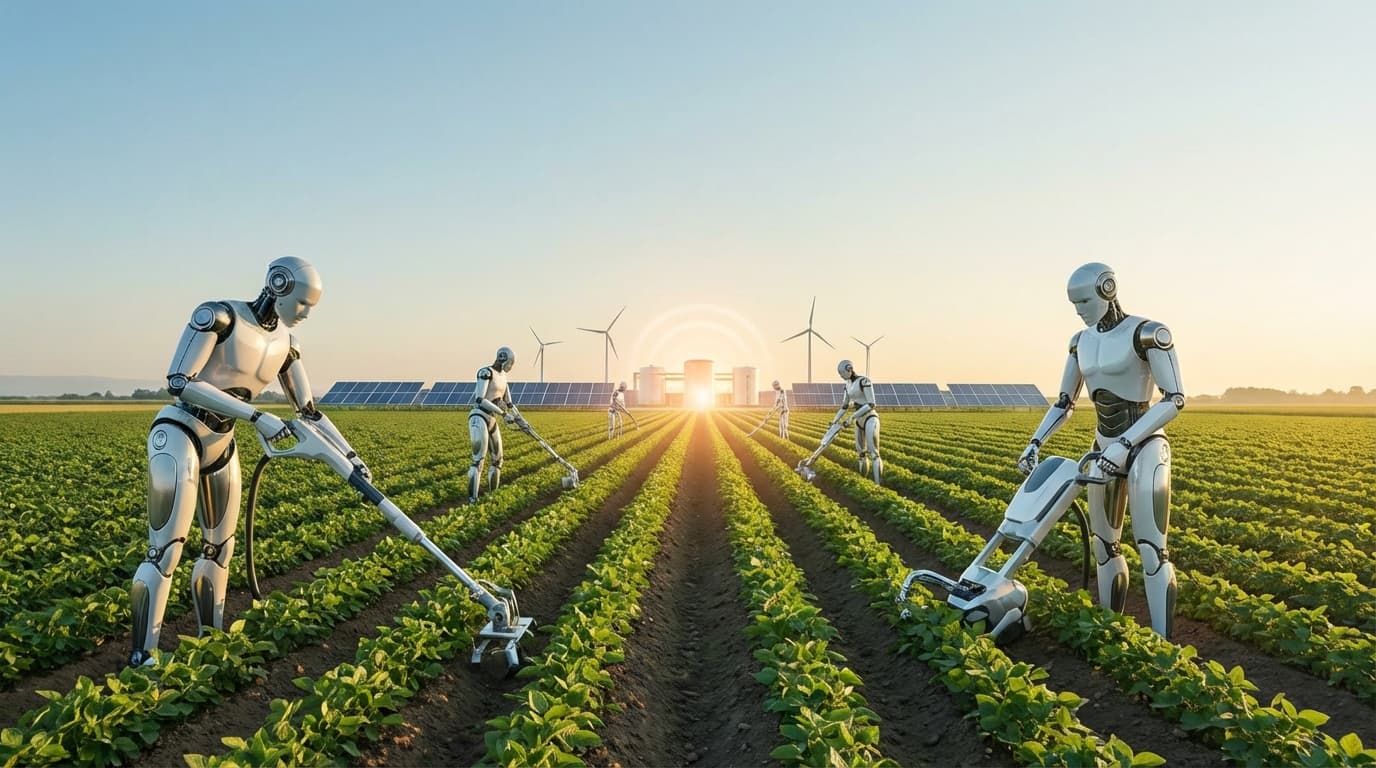
The image is certainly striking: an army of humanoid robots busy in our factories, warehouses, and even our homes, performing the tasks we no longer want or are able to do. This vision, long relegated to science fiction, is at the heart of Elon Musk's strategy with projects like the Tesla Optimus Gen 3. But behind this technological feat lies a staggering economic and social question: if robots work in our place, what will we live on?
Musk's answer, along with that of many other futurists and economists, can be summed up in two words: universal dividend. The idea, also known as Universal Basic Income (UBI), is not new, but it is gaining urgent relevance in the era of runaway artificial intelligence.
At the World Government Summit in 2017, Elon Musk stated: "There are fewer and fewer jobs that a robot cannot do better. [...] I think ultimately we will have to have some kind of universal basic income." (Source: CNBC).
In our analysis, it is no longer a question of if mass automation will happen, but how we will manage its societal consequences. This comprehensive guide aims to analyze, with our characteristic rigor and pragmatic approach, the arguments for and against establishing a universal dividend.
What is a Universal Dividend? Definition and Principles
Before diving into the debate, let's clarify what we're talking about. A universal dividend or income is a regular payment, disbursed by a public authority to every individual member of a community, without means-testing or a work requirement.
Its key characteristics are:
- Universality: It is paid to everyone, rich and poor alike.
- Unconditionality: There is no need to be looking for a job or to prove a need to receive it.
- Individuality: It is paid to the individual, not the household.
- Periodicity: It is paid at regular intervals (usually monthly).
The term "dividend" is not accidental. It implies that the wealth created by automation and common resources is a collective asset. Every citizen, as a "shareholder" in society, would therefore be entitled to a share of the profits generated.
The Arguments "For": A Social Contract for the 21st Century
Proponents of the universal dividend see it as an elegant solution to several major challenges of our time. Based on our experience and analysis of existing studies, the potential benefits are numerous.
1. A Response to Automation and the End of Traditional Work
This is the central argument in Musk's vision. If millions of jobs (drivers, warehouse workers, cashiers, and even certain white-collar professions) are set to disappear, the universal dividend acts as a fundamental safety net, preventing a large-scale social crisis and ensuring a decent standard of living for all.
2. Drastically Reducing Poverty and Inequality
By providing a basic income floor, the universal dividend could eradicate extreme poverty. It would give everyone the means to meet their essential needs (housing, food, healthcare), thereby reducing the glaring inequalities that fracture our societies.
3. Improving Public Health and Education
Numerous studies from pilot projects have shown a direct link between financial security and improved physical and mental health. Stress related to precarity decreases, and doctor's visits increase. Freed from the immediate urgency of survival, individuals can also invest in their education and acquire new skills.
4. Boosting Entrepreneurship and Creativity
Our experience in investment and business creation shows us that the fear of failure is a major deterrent. A basic income acts as seed capital for everyone. It allows people to take calculated risks: starting a small business, dedicating themselves to an artistic project, or engaging in volunteer work, thus stimulating innovation and local economic dynamism.
The Arguments "Against": A Utopia with Unpredictable Consequences
Despite its appeal, the idea faces considerable obstacles. As pragmatic analysts, it is crucial to examine these points with equal attention.
1. An Astronomical Cost and Uncertain Funding
This is the main sticking point. Paying, for example, €1,000 per month to every adult in France would represent an expenditure of several hundred billion euros per year, a significant portion of the GDP. How could such a measure be funded? Proposals vary (VAT hikes, financial transaction taxes, wealth taxes, robot taxes), but all would involve a massive and potentially destabilizing tax overhaul. The OECD has pointed out in its reports that funding a UBI at a decent level without massively increasing taxes is a major challenge (Source: OECD).
2. The Risk of Runaway Inflation
Massively injecting liquidity into the economy without a proportional increase in the production of goods and services could, according to classic economic theory, lead to high inflation. If the price of all consumer goods rises, the real purchasing power conferred by the universal dividend could be quickly wiped out.
3. The Impact on the Incentive to Work
The most common criticism is that people would stop working. If basic needs are covered, who will still accept difficult but necessary jobs? Experiments conducted so far tend to moderate this fear, showing a small impact on the overall employment rate (people continue to work to improve their situation), but the question remains for a large-scale implementation.
4. The Social and Psychological Value of Work
Work is not just a source of income. It is also a vehicle for social integration, recognition, and personal fulfillment. A society where work becomes optional for a large portion of the population could face a crisis of meaning, with problems of isolation and mental health. This completely redefines the very concept of productivity and contribution to society.
Our Analysis: An Inevitable but Gradual Transition
From our point of view, the question is not binary. The universal dividend is neither a miracle cure nor an unfeasible fantasy. It is more likely a tool that will be part of a profound economic and social transition.
Rather than an overnight revolution where a full universal income is implemented from one day to the next, we envision a gradual rollout. This could begin with:
- Targeted taxation: Specifically taxing the productivity gains from AI and automation to finance a sovereign wealth fund.
- A modest "citizen's dividend": Initially paying a symbolic amount, which would increase gradually as productivity gains materialize and the funding model stabilizes.
- Integration with existing systems: Simplifying and merging existing social benefits into a common foundation, as a first step toward a truly unconditional income.
This approach would allow for testing the macroeconomic effects (inflation, labor market) on a controlled scale and adjusting course as needed. It aligns with a logic of seeking to create passive income on a society-wide scale—a kind of collective financial freedom guaranteed by the technological advancements we ourselves have created.
The debate on the universal dividend forces us to ask fundamental questions about the future we want to build: a future where technology liberates humanity from labor, or one where it deepens unsustainable inequalities. Elon Musk's proposal, though provocative, has the merit of placing this crucial choice at the center of public debate.
Sources and References
To ensure the reliability of our analysis, we rely on recognized institutional and academic sources. We encourage you to explore the topic further through these resources:
- Organisation for Economic Co-operation and Development (OECD): The OECD has published several notes and reports analyzing the economic implications and funding challenges of a universal basic income in member countries.
- World Bank: The institution regularly publishes research on social safety nets, poverty, and unconditional cash transfer programs, particularly in developing countries.
- Abdul Latif Jameel Poverty Action Lab (J-PAL): Co-founded by Nobel laureates in economics Esther Duflo and Abhijit Banerjee, J-PAL conducts rigorous evaluations of social programs, including experiments on basic income.
- Stanford Basic Income Lab: A research center dedicated to the study of universal basic income, which catalogues global experiments, academic research, and policy debates on the topic.