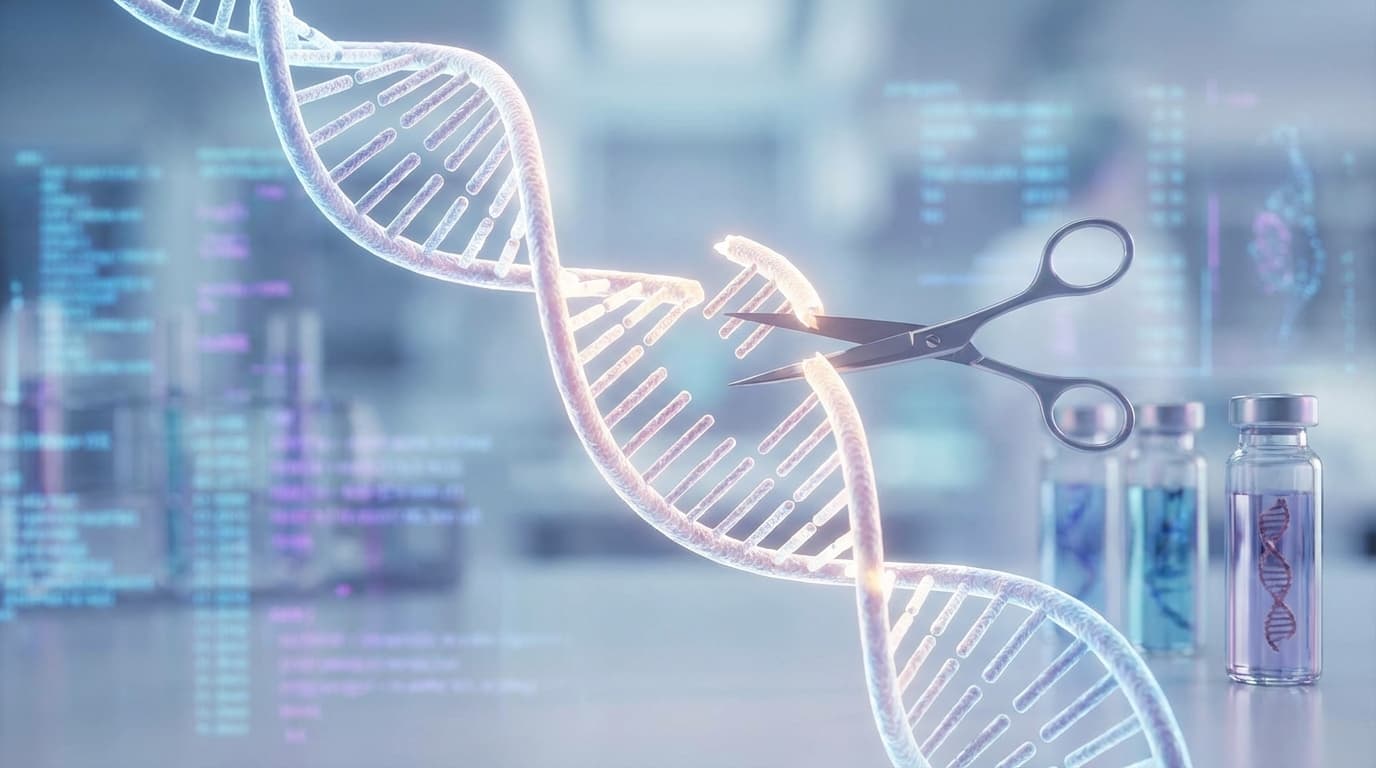
CRISPR in 2026: The Genetic Revolution Becomes a Tangible Reality
Long confined to research labs and cutting-edge scientific publications, CRISPR-Cas9 technology is no longer just a promise. In 2026, we are witnessing its spectacular transition from concept to practice. These "molecular scissors," capable of modifying DNA with previously unimaginable precision, are now at the heart of tangible applications that are redefining medicine, agriculture, and even our relationship with the environment. Based on our analysis of the latest breakthroughs, genome editing is no longer science fiction; it is a transformative force in action.
As an engineer passionate about technological breakthroughs, I have followed the evolution of CRISPR from its early days. What is striking today is the speed at which obstacles are falling, one after another. This article aims to provide a comprehensive overview of what CRISPR makes possible in 2026, while maintaining a clear-eyed view of the technical and ethical challenges that remain. Prepare to dive into the heart of one of the greatest scientific revolutions of our century.
An Essential Refresher: How Do CRISPR-Cas9 Scissors Work?
Before exploring the applications, a brief refresher is in order to fully grasp the power of this tool. Imagine the genome as a massive recipe book with billions of letters. Sometimes, a single typo in a recipe can lead to a serious disease.
CRISPR-Cas9 functions like an ultra-sophisticated "Find and Replace" system for this book:
- The guide RNA (gRNA): the molecular GPS. This is a small molecule programmed in the lab to recognize a very specific DNA sequence, corresponding to the "typo" we want to correct.
- The Cas9 enzyme: the precision scissors. The guide RNA is paired with a protein, most often Cas9, which acts like a pair of scissors. The guide leads Cas9 to the exact right spot on the DNA strand.
- The cut and repair. Once the target is found, Cas9 cuts the DNA. The cell, in its effort to repair the break, will use a new piece of DNA provided by scientists, thus correcting the original error.
The simplicity, relatively low cost, and precision of this technique have democratized genome manipulation, paving the way for the applications we will now detail.
Concrete Medical Applications on the Horizon for 2026
The healthcare sector is undoubtedly the primary beneficiary of the CRISPR revolution. Clinical trials are multiplying, and the first approved treatments are shaping a future where incurable diseases could be conquered.
Curing Monogenic Diseases: The First Victories
Monogenic diseases, caused by a mutation in a single gene, are ideal targets for CRISPR. In 2026, we are no longer talking just about promising trials, but about validated treatments.
- Sickle cell disease and beta-thalassemia: The treatment Casgevy, approved in late 2023 in the United States and the United Kingdom, is the spearhead of this new era. It involves taking the patient's stem cells, correcting the faulty gene responsible for these hereditary anemias ex vivo (in a lab), and then reinfusing them. Based on our experience and the follow-up of the first patients, the results are spectacular, eliminating the need for frequent and painful blood transfusions.
- Duchenne muscular dystrophy: Several clinical trials are in advanced stages. The goal is to correct the dystrophin gene mutation directly in the patient's muscle cells (in vivo). The major challenge remains the efficient and safe delivery of the CRISPR system to all muscles, but progress on viral vectors (AAVs) is steady.
- Cystic fibrosis: Research is focused on correcting the CFTR gene. Ex vivo approaches on lung stem cells and in vivo strategies using nebulization are being explored, with the hope of initial treatments by the end of the decade.
The Fight Against Cancer: Customized Cell Therapies
CRISPR not only aims to correct faulty genes but also to arm our own immune system. This is the field of CAR-T therapies, where a patient's T-cells are modified to hunt down and destroy cancer cells.
CRISPR steps in to make these CAR-T cells even more effective:
- Greater persistence: By inactivating certain genes (like the PD-1 gene), CRISPR prevents T-cells from becoming exhausted, allowing them to fight the tumor for longer.
- Better recognition: The tool allows for the modification of the T-cell receptor to more specifically target antigens present on the surface of tumors.
- "Off-the-shelf" treatments: Research aims to create allogeneic CAR-T cells (from a healthy donor) by editing their genome to prevent rejection by the patient's immune system. This would drastically reduce production costs and timelines.
In 2026, several CRISPR-enhanced CAR-T therapies are in Phase II and III clinical trials for leukemias, lymphomas, and even some solid tumors.
Diagnostics and Detection: Speed in the Service of Prevention
Beyond therapy, CRISPR is also a revolutionary diagnostic tool. Systems like SHERLOCK and DETECTR use enzymes similar to Cas9 (Cas12, Cas13) to detect the presence of a specific genetic sequence (virus, bacteria, cancer marker) in a sample (blood, saliva).
The advantages are immense:
- Speed: Results in under an hour.
- Sensitivity: Ability to detect very small amounts of genetic material.
- Portability: The development of paper-strip tests, similar to pregnancy tests, paves the way for in-the-field diagnostics, which is crucial during epidemics.
In 2026, these tools are beginning to be integrated into medical devices for the rapid screening of viral infections or for monitoring the viral load in HIV patients.
Beyond Healthcare: An Impact on Agriculture and the Environment
CRISPR's potential extends far beyond hospitals. Its applications in agronomy and ecology are just as promising, though more debated.
Agriculture 2.0: More Resilient and Nutritious Crops
CRISPR allows for the improvement of cultivated plants with unparalleled precision, often without introducing foreign genes. This is "editing" rather than "genetic modification," a crucial distinction for regulation and public acceptance.
- Disease and climate resistance: Researchers have developed wheat varieties resistant to powdery mildew, tomatoes that better tolerate drought, and rice that absorbs fewer heavy metals from the soil.
- Nutritional enhancement: Projects aim to create wheat with reduced gluten content, healthier vegetable oils, and hypoallergenic peanuts.
- Food preservation: One of the first CRISPR-edited products to be commercialized (in the United States) is a mushroom that doesn't brown, thereby reducing food waste.
In 2026, the regulatory debate is raging, particularly in Europe, but more and more countries are adopting more flexible legislative frameworks for these new plant breeding techniques, accelerating their arrival on the market.
Conservation and Control: The Controversial Case of Gene Drive
Gene drive is a powerful and controversial application of CRISPR. It involves introducing a genetic modification that spreads to nearly 100% of a species' offspring, instead of the usual 50%.
The potential applications are staggering:
- Eradication of vector-borne diseases: Making Anopheles mosquitoes incapable of transmitting malaria or the Zika virus.
- Protection of endangered species: Conferring resistance to diseases that are decimating certain populations (e.g., Hawaiian birds threatened by avian malaria).
- Control of invasive species: Sterilizing populations of rats or cane toads that destroy local ecosystems.
However, our experience teaches us that any powerful technology comes with risks. Releasing a gene-drive organism into the wild is a potentially irreversible decision. The risks of unforeseen ecological consequences are immense, and international scientific and ethical consensus is essential before any large-scale use.
Current Limitations and Challenges: Hurdles to Overcome
Despite these spectacular advances, CRISPR is not a magic wand. For its full potential to be realized, the scientific community must overcome several major obstacles. Being transparent about these limitations is essential for building trust.
Off-Target Effects: The Quest for Absolute Precision
The biggest risk in genome editing is the scissors cutting in the wrong place. An "off-target" effect could inactivate an essential gene or activate an oncogene, with potentially disastrous consequences. Intense research is being conducted to improve the fidelity of Cas9 and its alternatives (Cas12, AsCas12a) and to develop ever more sensitive methods for detecting these errors.
The Delivery Challenge: How to Get the Tool to the Right Cell?
This is perhaps the biggest bottleneck for in vivo therapies today. How can the CRISPR-Cas9 complex be delivered specifically to liver, brain, or heart cells, and only to those cells?
Several strategies are under investigation:
- Viral vectors (AAVs): Effective, but can trigger an immune response and have a limited payload capacity.
- Lipid nanoparticles (LNPs): The same technology used for mRNA vaccines. They are promising but primarily target the liver.
- Non-viral approaches: Electroporation, microinjections... Effective ex vivo but more complex to implement inside the human body.
Ethical and Regulatory Questions: An Essential Dialogue
The power of CRISPR raises fundamental questions. The most sensitive is the modification of germline cells (sperm, eggs), which would pass changes on to future generations. After the "CRISPR babies" scandal in 2018, a de facto moratorium is in place in most countries, but the debate over the red lines not to be crossed is more heated than ever. Regulation must find a delicate balance between promoting innovation and preventing misuse.
AI and CRISPR: The Winning Duo for the Future of Biology
The final, and by no means least, accelerator is the synergy between CRISPR and artificial intelligence. AI in biology is becoming an indispensable partner for optimizing genome editing.
- Design of guide RNAs: Machine learning algorithms can predict the best guide RNAs for a given target in seconds, maximizing efficiency and minimizing the risk of off-target effects.
- Data analysis: AI can analyze massive volumes of genomic data to identify new therapeutic targets or understand the consequences of a genetic modification at the whole-organism level.
- Protein structure prediction: Tools like AlphaFold allow for the 3D modeling of Cas proteins and their modification to create new, more efficient versions.
This convergence of computer science and biology is the key that will unlock many technical hurdles and lead to the design of safer and more effective therapies. It is undoubtedly what is shaping the future of biology.
In 2026, CRISPR has moved far beyond the proof-of-concept stage. It is a mature tool whose first applications are already saving lives and transforming entire sectors of our economy. The challenges remain immense, but the momentum of innovation is so strong that the coming years are certain to hold even more extraordinary advances in store for us.
Sources and References
To ensure the rigor of our analyses, we rely on leading scientific and institutional sources. We invite you to consult them to delve deeper into the subject.
- INSERM (French National Institute of Health and Medical Research): INSERM's reference file on CRISPR-Cas9 offers an excellent plain-language explanation of the mechanisms and medical issues in France.
- Nature Biotechnology: One of the most prestigious scientific journals, which regularly publishes cutting-edge studies on new applications and improvements in CRISPR technology.
- Broad Institute (MIT & Harvard): One of the pioneering institutes in the development of CRISPR-Cas9 for mammalian genome editing. Their website is a wealth of information on the fundamental aspects of the technology.
- World Health Organization (WHO): The WHO publishes reports and recommendations on the ethical and governance aspects of human genome editing, which are essential for understanding the international regulatory framework.