2025 in Review: A Pivotal Year for Biology
The year 2025 will be etched in the annals as a period of radical transformation for the life sciences. Driven by the explosive convergence of artificial intelligence, genomic engineering, and a deeper understanding of complex systems, biology took giant leaps forward. From research labs to clinical applications, the discoveries of 2025 didn't just answer old questions; they opened up horizons of possibility we were only just beginning to imagine. This retrospective looks back at the most significant breakthroughs that have redefined our relationship with the living world, from the smallest bacterium to the complexity of the human brain.
The Era of Genomic Healing: CRISPR 2.0 and Precision Editing
While previous years saw the advent of CRISPR-Cas9, 2025 was the year of its maturation and the emergence of its successors, collectively nicknamed "CRISPR 2.0." These new techniques, such as base editing and prime editing, have reached unprecedented levels of precision and safety, transforming gene therapy from an experimental promise to a clinical reality for many diseases.
The First Victories Over Monogenic Diseases
The most spectacular breakthrough was the approval of the first in vivo treatments for previously incurable genetic diseases.
- Cystic Fibrosis: Phase III clinical trials showed a near-complete restoration of lung function in patients with specific mutations, thanks to a single injection of modified viral vectors carrying base editors directly into the lung epithelial cells.
- Huntington's Disease: A new prime editing approach successfully corrected the abnormal CAG triplet repeat on the huntingtin gene directly in the neurons of early-stage patients, halting the progression of the disease. This world-first achievement has given new hope to millions of families.
- Sickle Cell Anemia: Ex vivo therapies (where the patient's stem cells are modified in a lab before being re-infused) have become more accessible and effective, drastically reducing painful crises and the need for blood transfusions.
These successes were made possible by significant improvements in delivery systems, using lipid nanoparticles and modified adenoviruses to target specific tissues with formidable efficiency, all while minimizing off-target effects. Ethical debates intensified, but the tangible therapeutic benefit has paved the way for a new era of personalized medicine.
AI, The Biologist's Indispensable Partner
Artificial intelligence has ceased to be a mere tool and has become a true research partner. In 2025, AI models are no longer content with just analyzing data; they formulate hypotheses, design experiments, and predict outcomes with surprising acuity.
The Predictive Biology Revolution
Building on the foundations laid by AlphaFold, new AI models like "ProteoSim" and "InteractomeGPT" have reached a major milestone. They no longer just predict the 3D structure of an isolated protein but simulate the dynamic interactions within complex multi-protein complexes.
What does this mean in practice? Researchers can now visualize in real time how a potential drug interacts with its target, as well as with thousands of other proteins in the cell. This allows them to anticipate side effects even before the first chemical synthesis. Creating prompts for artificial intelligence has become a key skill for biologists, enabling them to dialogue with these systems to model complex biological scenarios.
The End of the Therapeutic Odyssey
In 2025, AI-assisted drug discovery had its moment in the sun. Faced with the growing threat of antibiotic-resistant superbugs, an AI platform analyzed billions of molecular compounds and identified a new class of antibiotics in under three months. The process, which would normally have taken a decade and cost billions, was reduced to a fraction of the time and cost, demonstrating the power of this human-machine synergy.
Synthetic Biology: Building Life to Understand It
Synthetic biology has left the realm of science fiction and entered the world of applied engineering. The ability to design and build biological circuits and organisms with new functions has exploded.
New-Generation Organoids
Organoids, these miniature versions of organs grown in a lab, have become incredibly sophisticated. In 2025, scientists succeeded in:
- Creating vascularized "mini-brains": These complex structures have made it possible to model neurodegenerative diseases like Alzheimer's with unparalleled fidelity, observing the formation of amyloid plaques and their impact on neural networks in real time.
- Developing functional pancreatic organoids: In vitro cultured islets of Langerhans were able to produce insulin in response to glucose, offering immense hope for the treatment of type 1 diabetes.
- Using personalized tumor organoids: For cancer patients, biopsies of their own tumor were grown into organoids, on which dozens of chemotherapies could be tested simultaneously to identify the most effective treatment, without exposing the patient to ineffective therapies.
Cells as Microscopic Factories
The design of synthetic cells has also advanced. Yeast and bacteria have been reprogrammed to produce not only biofuels more efficiently, but also advanced materials like synthetic spider silk for medical and textile applications, and even rare pharmaceutical compounds. These "living factories" promise more sustainable and environmentally friendly production for many industries.
Neuroscience: Unlocking the Secrets of Consciousness
The human brain, the final frontier, has begun to yield some of its deepest secrets in 2025. Technological advancements have allowed us to observe and interact with the brain at an unprecedented spatial and temporal resolution.
Brain-Computer Interfaces (BCIs) for Everyone
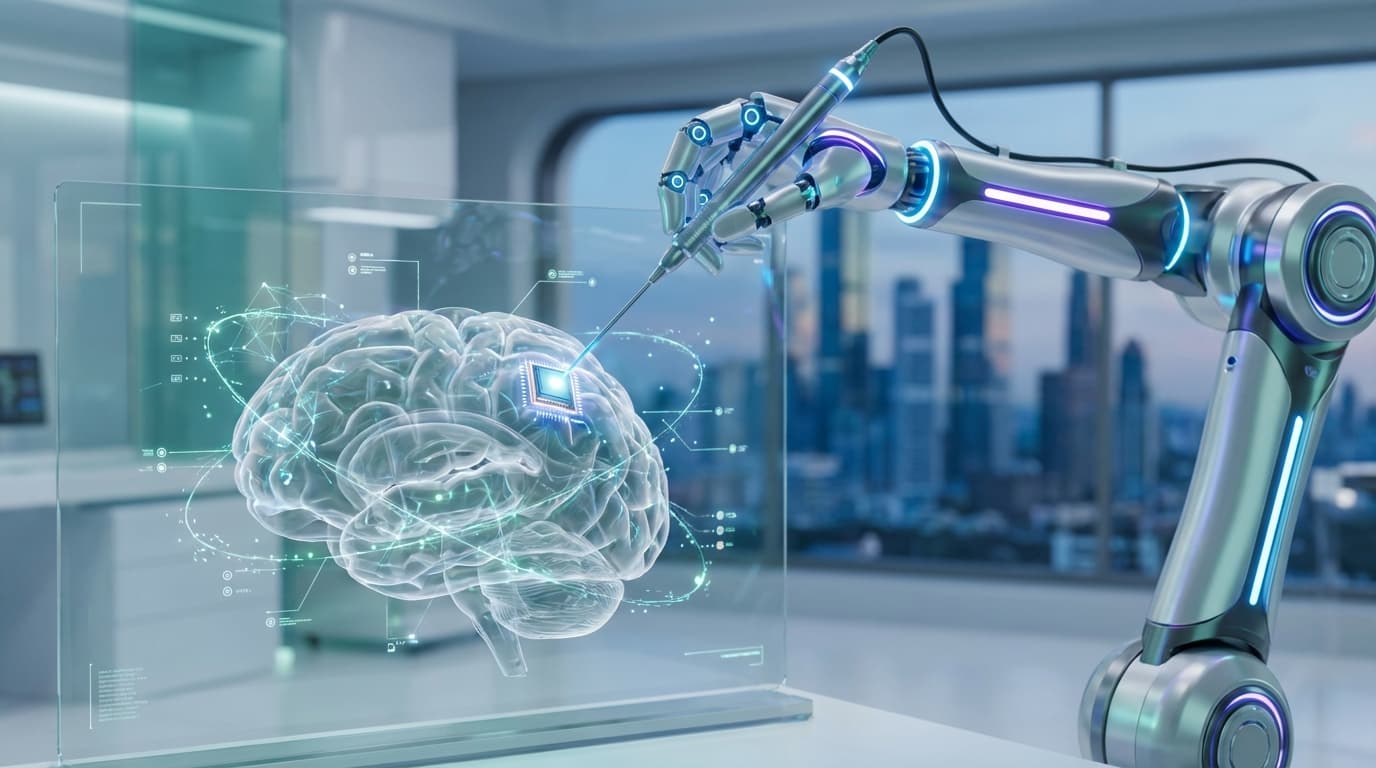
BCIs have begun to move out of research labs and into the lives of patients with paralysis. New, less invasive implants, combined with AI algorithms capable of decoding motor intent with over 95% fidelity, have allowed tetraplegic individuals to control robotic arms with near-natural fluidity. This fusion of biology and machine raises fascinating questions that touch on the field of robotic psychology, exploring how our self-perception changes when our will can directly act upon the world through a machine.
Mapping Memory and Emotions
Thanks to refined optogenetics and new imaging techniques, neuroscientists have been able to visualize the formation and consolidation of a memory in a mammal's brain in real time. They have identified the specific neural circuits that encode not only the factual memory ("what" and "where") but also its emotional charge ("how I felt"). This fundamental discovery has opened new avenues for treating post-traumatic stress disorder (PTSD) by seeking to dissociate the traumatic memory from its negative emotional charge.
Conservation Biology: Technology to the Rescue of the Planet
In the face of the accelerating climate crisis and biodiversity loss, conservation biologists deployed an impressive technological arsenal in 2025.
Environmental DNA (eDNA) at Scale
The analysis of environmental DNA, the genetic traces left by organisms in water, soil, or air, has become a standardized and automated monitoring method. Autonomous drones equipped with sample collectors and portable sequencers have been able to map the biodiversity of remote areas of the Amazon or the depths of the ocean in a matter of days, a task that would have previously required years of expeditions. This near-real-time data has enabled faster and more targeted conservation measures.
Genetic Rescue of Endangered Species
The concept of "genetic rescue" has been successfully put into practice. For coral reefs, biologists have used genome editing to introduce heat-resistance genes identified in naturally more tolerant coral species. These "assisted" corals have shown significantly higher survival rates during bleaching events, offering a glimmer of hope for these vital ecosystems. Although controversial, this assisted evolution approach is now considered a potentially indispensable tool.
The Search for Alien Life on Earth
The search for extremophilic organisms on Earth has led to the discovery of microbes in environments once thought to be sterile, such as pockets of hypersaline water buried several kilometers beneath the Antarctic ice. These discoveries have not only expanded our definition of the limits of life, but they have also provided crucial models for space exploration missions searching for traces of life on moons like Europa or Enceladus.